article
Minimum Thread Engagement: How Deep Must a Tapped Hole Be?
The bolt should break before the threads strip. How to size tapped-hole engagement from proof load and shear strength instead of rules of thumb.
Published Jun 12, 2026 - Maintained by Ashish Kapoor
This technical page is maintained by Ashish Kapoor, a project engineering lead. Use it as a learning and calculation-review aid, then verify critical work against current standards, project documents, supplier data, and competent engineering review.
Found an assumption, unit, formula, or standards-reference issue? Send the page URL through the contact page so it can be corrected.
When a bolt threads into a tapped hole instead of a nut, the joint's weak point is often not the bolt — it is the internal thread. If the engagement is too shallow, the tapped threads strip before the bolt reaches its proof load, and a stripped hole in a casting or weldment is far more expensive than a broken bolt. This article explains the engagement-depth estimate used by the Thread Engagement module in the enggtools.in Tolerance Stackup tool.
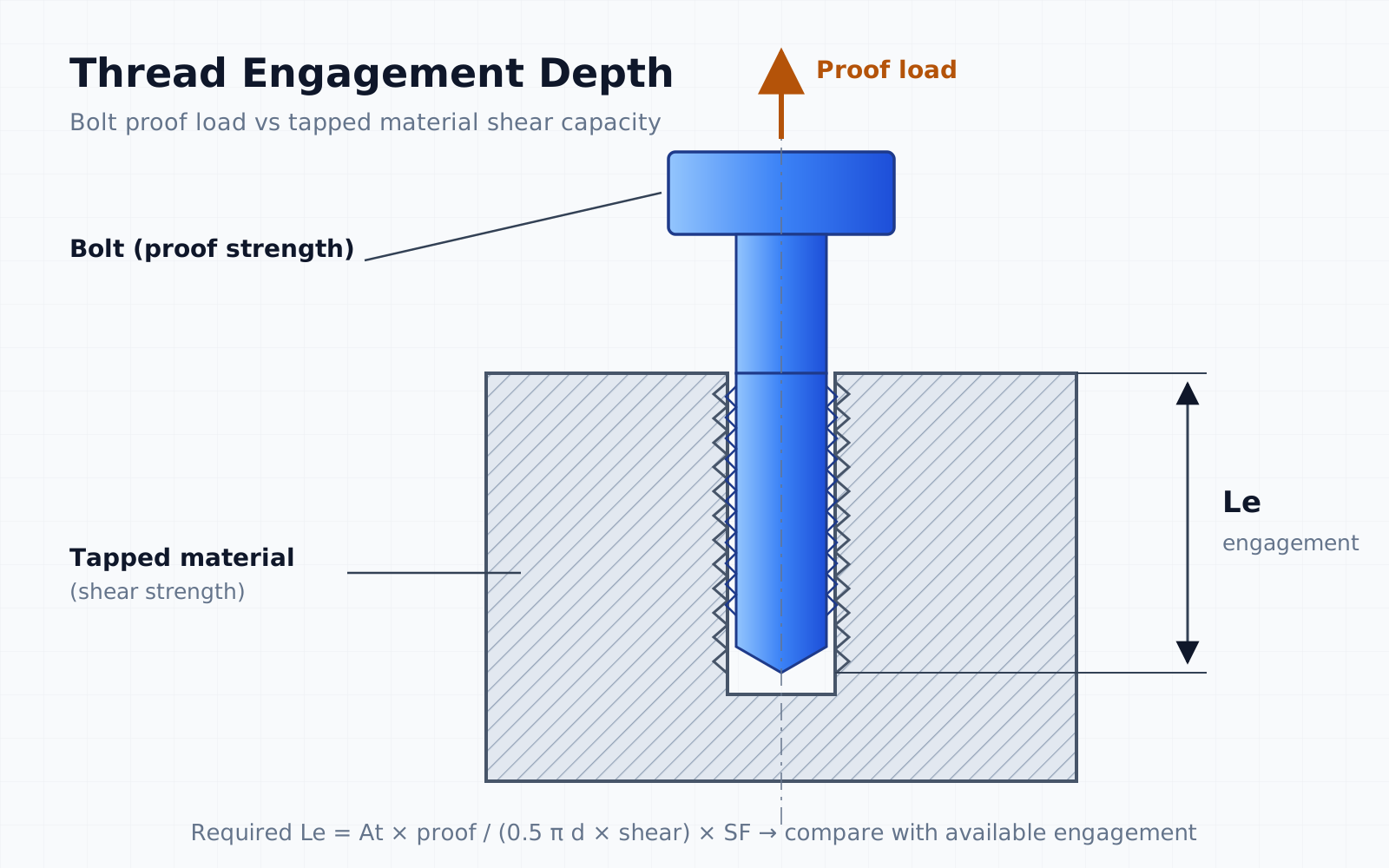
The design principle: the bolt should fail first
A well-designed threaded joint is sized so the bolt breaks in tension before either thread strips. A broken bolt is visible and replaceable; stripped internal threads can go unnoticed and condemn the part. So the question becomes: how much engagement length makes the internal-thread shear capacity at least equal to the bolt's proof load?
Step 1 — bolt proof load
The load the engagement must carry is the bolt's proof strength acting on its tensile stress area. The module computes the tensile area from the mean of the pitch and minor diameters:
Pitch diameter = d − 0.9743 / n (inch, n = TPI) or d − 0.64952 × p (metric, p = pitch)
Minor diameter = d − 1.2269 / n (or − 1.2269 × p metric)
At = π/4 × ((pitch dia + minor dia) / 2)²
Proof load = At × proof strength
Step 2 — required engagement
The internal threads shear on an approximately cylindrical surface. Per unit of engaged length, the module takes the effective shear periphery as half the bolt circumference (0.5 π d), which accounts for the fact that only part of each thread flank carries shear. The required engagement is then:
Required Le = Proof load / (tapped shear strength × 0.5 π d) × Safety factor
The tapped material strength you enter is its shear strength directly — the module applies no hidden 0.577 conversion. If your data sheet only lists tensile strength, multiply by 0.577 (von Mises) yourself before entering, or use a published shear value. The safety factor (1.5 to 2 is typical for structural joints) covers thread form tolerance, partial first-thread engagement, and tap drill variation.
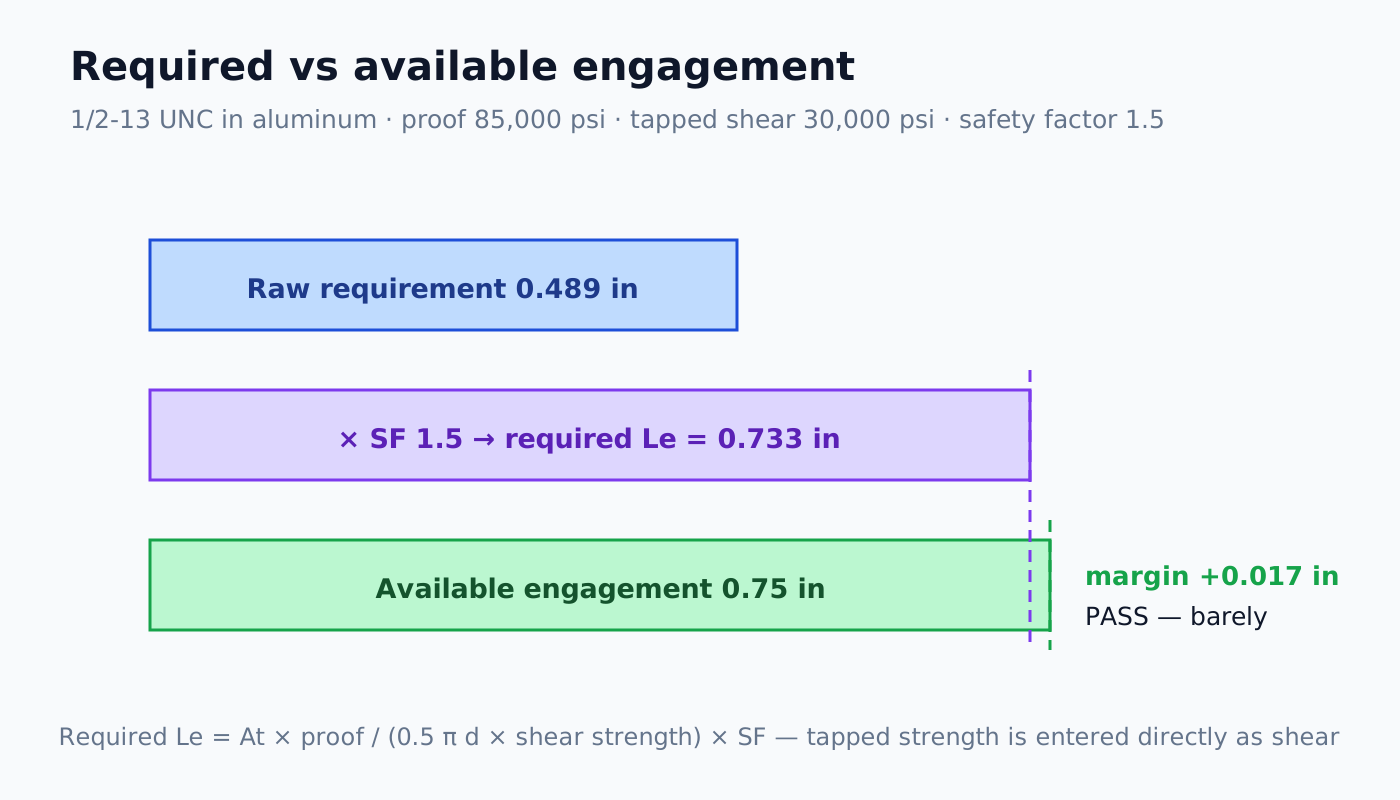
Worked example: 1/2-13 UNC into aluminum
Bolt: 1/2-13 UNC, proof strength 85,000 psi. Tapped material: aluminum with 30,000 psi shear strength. Available engagement: 0.75 in. Safety factor: 1.5.
Pitch diameter = 0.5 − 0.9743/13 = 0.4251 in. Minor diameter = 0.5 − 1.2269/13 = 0.4056 in. Tensile area At = π/4 × (0.4154)² = 0.1355 in². Proof load = 0.1355 × 85,000 ≈ 11,514 lbf.
Shear periphery = 0.5 π × 0.5 = 0.7854 in. Raw engagement = 11,514 / (30,000 × 0.7854) = 0.489 in. With the 1.5 safety factor, required Le = 0.733 in. The available 0.75 in gives a margin of +0.017 in → PASS, though with little to spare; one extra thread of depth would be cheap insurance.
Rules of thumb and limits
The familiar guidelines — 1×d engagement in steel, 1.5×d in aluminum, 2×d in plastics — fall straight out of this formula when you insert typical strength ratios. Use the calculation instead of the rule of thumb whenever the tapped material is weak, the bolt is high-grade (a 12.9 bolt in 6061 needs far more than 1.5×d), or the hole depth is design-constrained. Remember this is a preliminary sizing check: it does not model thread form class, tapered first threads, or temperature effects. For critical joints, verify against FED-STD-H28 or VDI 2230.
Size your own tapped joint in the free Tolerance Stackup tool on enggtools.in — it reports the required depth, the margin, and the full calculation steps.