article
Press Fit or Clearance Fit? Checking Shaft and Bore Limits the Right Way
Guaranteed press, guaranteed clearance, or could it be either? The four limits that decide every shaft/bore fit - and why coating changes the answer.
Published Jun 12, 2026 - Maintained by Ashish Kapoor
This technical page is maintained by Ashish Kapoor, a project engineering lead. Use it as a learning and calculation-review aid, then verify critical work against current standards, project documents, supplier data, and competent engineering review.
Found an assumption, unit, formula, or standards-reference issue? Send the page URL through the contact page so it can be corrected.
Before any detailed interference-pressure calculation, a designer needs to answer a simpler question: with the tolerances actually on the drawing, is this joint guaranteed to be a press fit, guaranteed to be a clearance fit, or could it be either? This article explains the limit check used by the Press Fit module in the enggtools.in Tolerance Stackup tool.
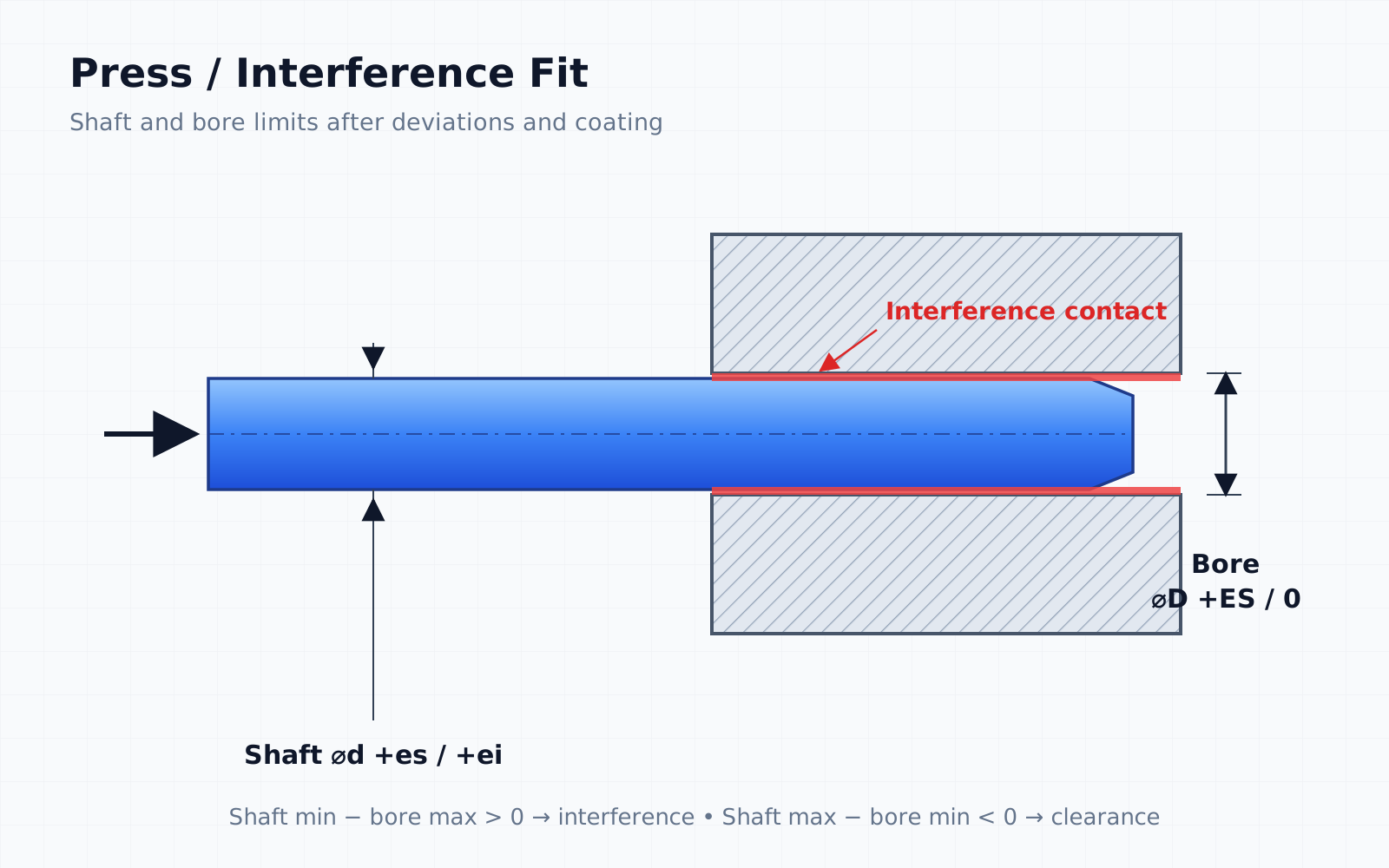
Deviations, not tolerances
A shaft or bore size is defined by its nominal diameter plus two deviations. A 50 mm p6 shaft is 50 +0.042/+0.026 — both deviations are positive, so even the smallest acceptable shaft is larger than 50 mm. A 50 mm H7 bore is 50 +0.025/0. This is why the Press Fit module keeps the sign you enter for both deviations: interference fits depend on positive lower deviations, and forcing them negative would make standard ISO fits like H7/p6 impossible to model. Enter the deviations exactly as the fit table or drawing states them, including the sign.
The four limits
The check builds four numbers. Coating (paint, plating, anodize) is applied per face, so it adds twice on a diameter:
Shaft max = nominal + upper deviation + 2 × shaft coating
Shaft min = nominal + lower deviation + 2 × shaft coating
Bore max = nominal + upper deviation − 2 × bore coating
Bore min = nominal + lower deviation − 2 × bore coating
Note the direction of the coating terms: coating on a shaft makes it bigger; coating inside a bore makes the opening smaller. Plating a "clearance" joint has turned many assemblies into accidental press fits.
Classifying the fit
Two differences decide everything:
Minimum condition = shaft min − bore max — if this is positive, even the smallest shaft interferes with the largest bore: a guaranteed interference fit.
Maximum condition = shaft max − bore min — if this is negative, even the largest shaft clears the smallest bore: a guaranteed clearance fit.
If the minimum condition is negative but the maximum condition is positive, the joint is a transition fit: individual part pairs may assemble loose or tight. Transition fits are legitimate design choices (locating dowels, light keying), but they are a red flag wherever the function demands a guaranteed press or guaranteed clearance.
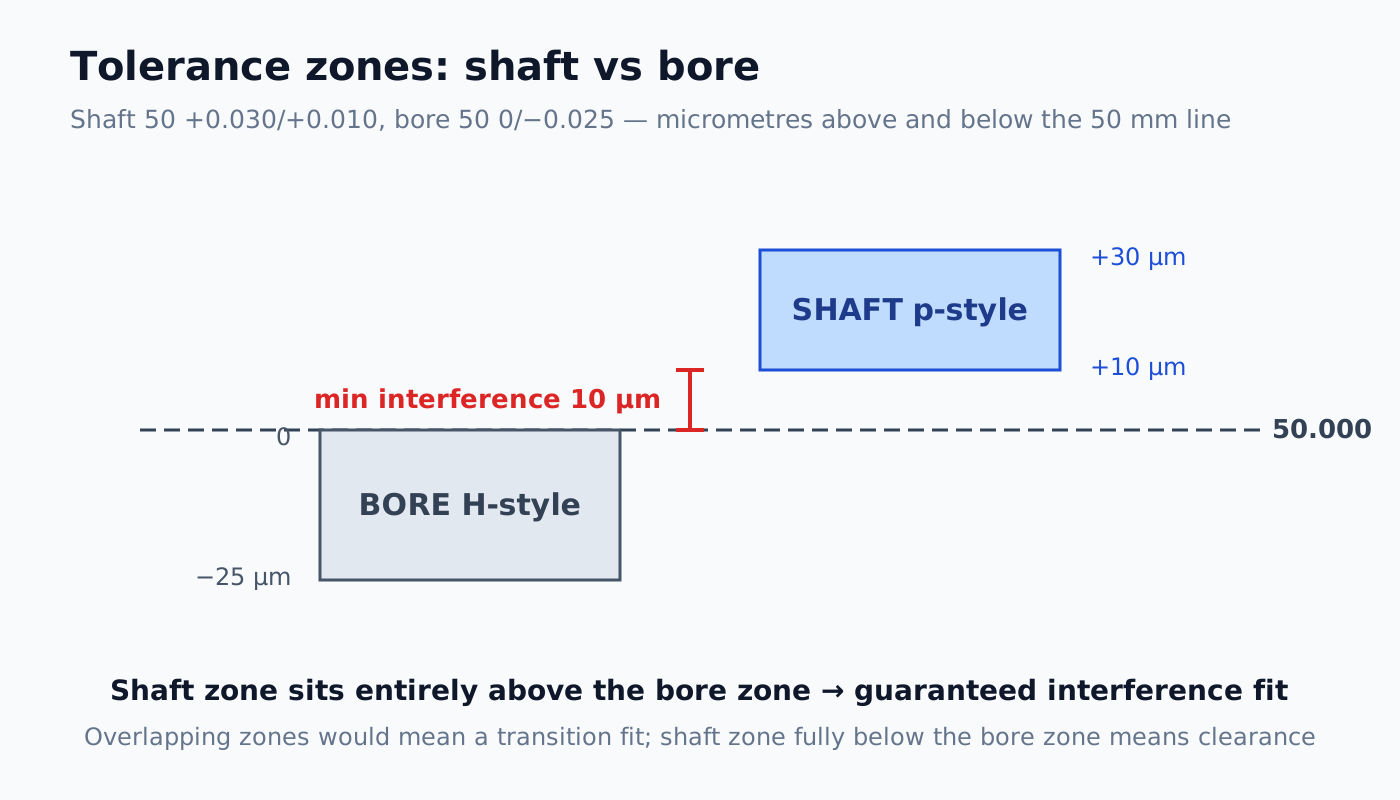
Worked example
Shaft: 50 +0.030/+0.010 mm. Bore: 50 0/−0.025 mm. No coating.
Shaft limits: 50.010 to 50.030 mm. Bore limits: 49.975 to 50.000 mm.
Minimum condition: 50.010 − 50.000 = +0.010 mm — positive, so the joint always interferes. Maximum condition: 50.030 − 49.975 = +0.055 mm — the heaviest possible press. The module reports INTERFERENCE FIT with an interference range of 0.010 to 0.055 mm. That range is the input you would carry into a detailed interference-pressure or assembly-force calculation (Lamé equations, thermal assembly, etc.) — the stackup module deliberately stops at fit classification.
Practical tips
Always take deviations from the same standard (ISO 286 fit tables or the drawing itself) rather than mixing sources. Re-run the check whenever a coating or plating callout changes, because 25 µm of plating shifts a diameter by 50 µm. And if your result is a transition fit where the design intent says "press", tighten the shaft grade before touching the bore — shafts are usually cheaper to hold tight than bores.
Run your own shaft/bore combination in the free Tolerance Stackup tool on enggtools.in and get the fit classification with a step-by-step calculation report.