article
Padeye vs Shackle: The Two Fit Checks Every Lifting Lug Needs
A padeye can pass every stress check and still not accept the shackle. The two geometric fit checks to run before the lift plan goes out.
Published Jun 12, 2026 - Maintained by Ashish Kapoor
This technical page is maintained by Ashish Kapoor, a project engineering lead. Use it as a learning and calculation-review aid, then verify critical work against current standards, project documents, supplier data, and competent engineering review.
Found an assumption, unit, formula, or standards-reference issue? Send the page URL through the contact page so it can be corrected.
A lifting padeye can be perfectly sized for load and still fail at the rigging stage — because the shackle pin will not pass through the painted hole, or the shackle jaw will not swallow the plate. Both are pure tolerance-stackup problems, and both are caught in seconds by the Padeye vs Shackle module in the enggtools.in Tolerance Stackup tool. This article walks through the two checks.
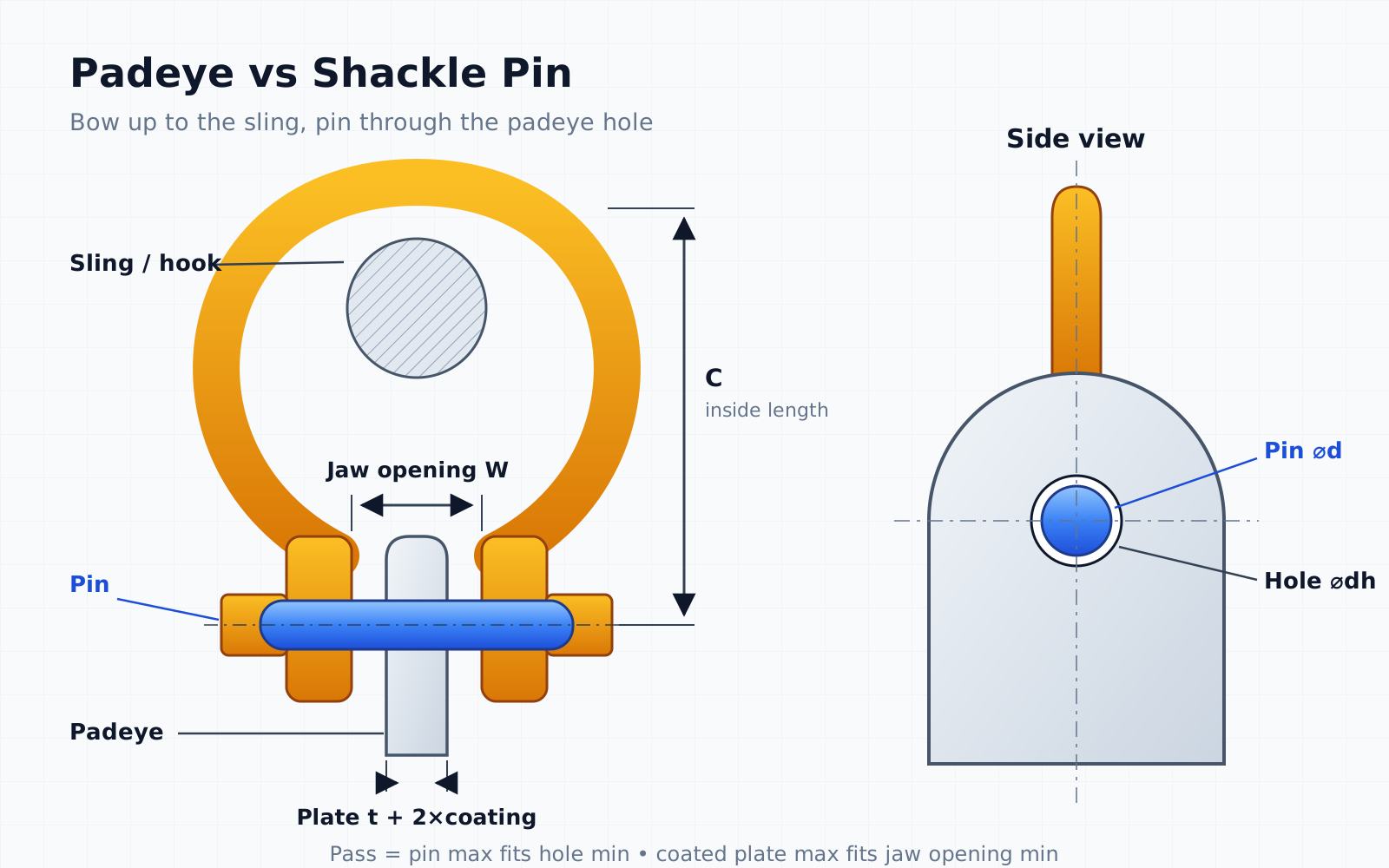
Check 1 — pin through hole
The worst case pairs the smallest acceptable hole with the largest acceptable pin. Coating matters twice, because paint builds up on both sides of the bore:
Hole min = nominal + lower deviation − 2 × coating
Pin max = pin diameter + upper deviation
Pin clearance = hole min − pin max (must be > 0)
Shackle pins are usually well undersized relative to the recommended hole (rigging practice keeps the hole at pin + a few percent), so this check fails mostly when a padeye is re-used with a bigger shackle, or when a heavy coating system (multi-coat offshore paint, metallizing) eats the clearance.
Check 2 — jaw over plate
The shackle jaw (the inside width between the ears) must clear the plate including coating on both faces and including any cheek plates:
Plate max = thickness + upper deviation + 2 × coating
Jaw min = jaw opening + lower deviation
Jaw clearance = jaw min − plate max (must be ≥ 0)
Catalogue jaw openings are nominal; manufacturers allow a tolerance, and a forged shackle at its narrow limit meeting a plate at its thick limit with fresh paint is exactly the combination found on site. Good rigging practice also wants some slack here so the shackle can articulate without prying the lug — many specs ask the jaw not to be loaded against the plate at all.
Sign convention: lower deviations are always negative
Every lower deviation in this module — hole, pin, plate thickness, and jaw opening — is applied as negative regardless of the sign you type. Entering a jaw opening tolerance as "1" or "−1" both give a minimum opening of nominal − 1. This mirrors how the limits physically act (the dangerous hole is the small one, the dangerous jaw is the narrow one) and removes sign mistakes from catalogue data entry.
Worked example
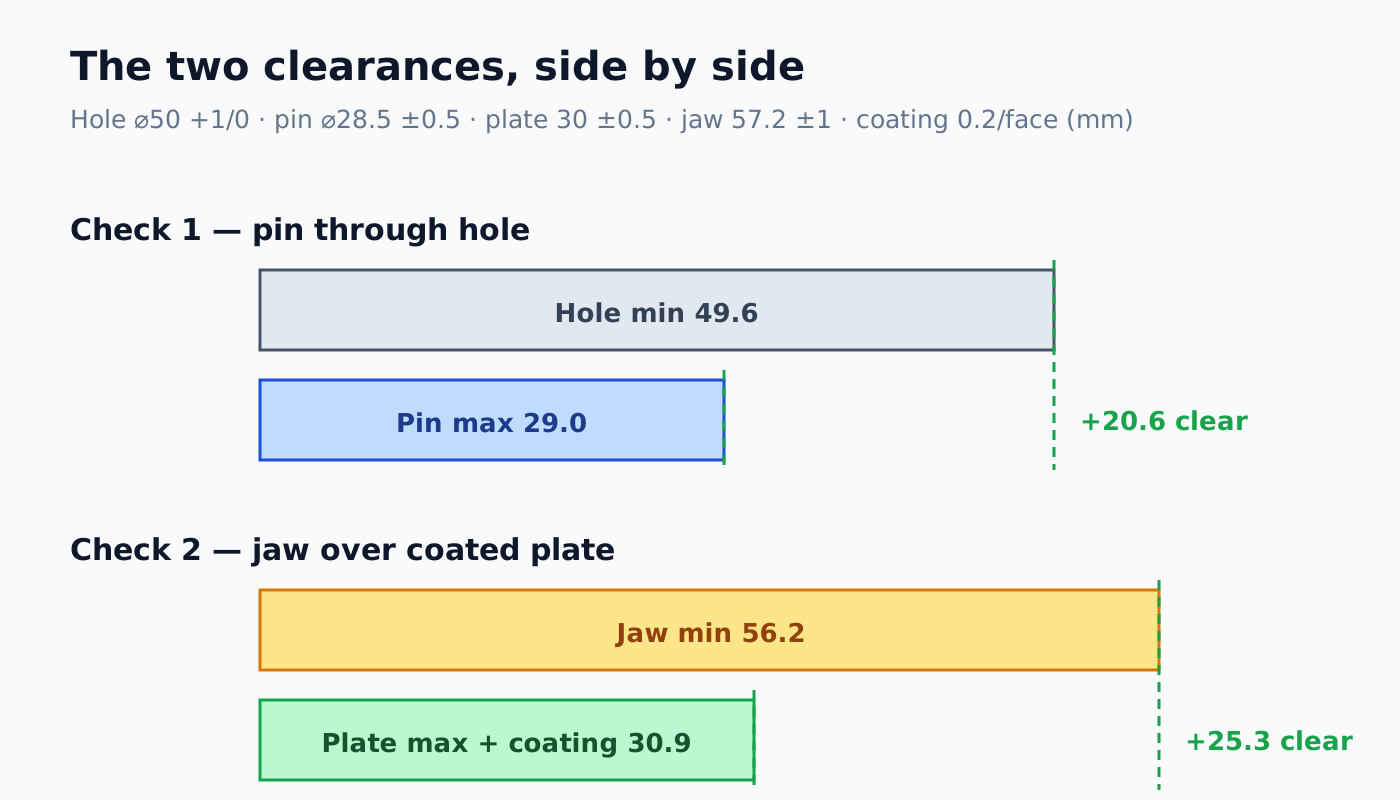
Padeye: hole ⌀50 +1/0 mm, plate 30 ±0.5 mm, coating 0.2 mm per face. Shackle (8.5 t bolt-type anchor): pin ⌀28.5 ±0.5 mm, jaw opening 57.2 ±1 mm.
Pin check: hole min = 50 + 0 − 0.4 = 49.6 mm; pin max = 29.0 mm; clearance = +20.6 mm — generous, as expected for a hole sized for a larger rigging arrangement.
Jaw check: plate max = 30.5 + 0.4 = 30.9 mm; jaw min = 57.2 − 1 = 56.2 mm; clearance = +25.3 mm → PASS. Both conditions hold, so the shackle fits the padeye across all tolerance extremes.
What the module does not check
This is a geometric fit check only. It does not verify the working load limit, padeye stress (bearing, tear-out, Lund/cheek-plate weld), sling angle effects, or D/d ratios — run those in a lifting calculation. But because it uses catalogue shackle dimensions (brand, series, and size are selectable in the tool), it is the fastest way to confirm the rigging hardware physically fits the steel before the lift plan is issued.
Check your own padeye and shackle pairing in the free Tolerance Stackup tool on enggtools.in — select the shackle from the built-in catalogue and enter the padeye data from the drawing.